
Contact Columbus Door Sales Today!
Thank you! Your submission has been received!
Oops! Something went wrong while submitting the form.

Your front door does more than provide access—it sets the tone for your entire home. The right design can elevate curb appeal, strengthen security, and improve everyday comfort. Materials, insulation, and hardware all play a role in long-term performance. A well-chosen door blends style with durability, creating a welcoming yet protective entrance. In this blog, we’ll explore how selecting the right entry door enhances appearance, efficiency, and overall home value.
Your front door is usually the first detail people notice from the street and the last thing they touch when leaving home. It sets the tone for your entire property and speaks volumes about how well you care for your space. For many homes built between 1980 and 2010, original front doors are now faded, drafty, or warped—making door replacement one of the highest-impact upgrades you can tackle.
Consider this scenario: replacing a plain, builder-grade steel door with a paneled fiberglass door featuring glass sidelights can instantly boost curb appeal on a typical suburban home. What was once a forgettable entrance becomes a focal point that welcomes guests and catches the eye of potential buyers. That updated entry door does more than look better—it performs better, too.
In this blog, you’ll learn how to pick the right entry door for your home, when to replace the frame versus just the door slab, and which features deliver the most value for your investment. Whether you’re focused on improving energy efficiency, enhancing security, or simply giving your home’s exterior a fresh look, the right door makes all the difference.
Material choice affects durability, maintenance, security, and cost over the next 10–20 years. Understanding the strengths and limitations of each option helps you make a decision that’s right for your home and lifestyle.
Solid wood doors offer a warm, classic appearance that’s difficult to replicate. They’re often the choice for historic homes and high-end properties where natural wood grain and traditional craftsmanship matter most. Available in oak, cherry, walnut, mahogany, and other species, a wood door can be stained or painted to match any vision.
However, wood requires regular maintenance to reach its 20–30 year lifespan. In sunny or wet climates, periodic refinishing becomes essential to prevent warping, cracking, and rot. Wood also offers fair energy efficiency with R-2 to R-3 values—adequate but not exceptional compared to modern alternatives. Understanding how to prevent your entry door from warping becomes especially important for homeowners choosing natural wood materials exposed to seasonal humidity and temperature shifts.
Steel doors currently account for approximately half of the residential entry door market, and for good reason. They offer excellent security at budget-friendly pricing, with solid construction that resists forced entry more effectively than other materials. Premium steel doors feature insulated cores that deliver R-5 to R-6 energy efficiency ratings.
The trade-offs? Steel can dent from hard impacts, and dents prove challenging to repair. Scratches require prompt painting to prevent rust development. The material also tends to feel hot or cold to the touch in extreme temperatures. But for homeowners prioritizing security without premium investment, steel doors deliver dependable performance.
Fiberglass entry doors represent the premium category, offering durability, beauty, and performance in one package. These doors resist warping, cracking, and deterioration better than any other residential door material, with a lifespan of 30–50+ years. The energy efficiency profile shows R-6 to R-8 values—the best insulation available among standard door materials.
Realistic woodgrain finishes allow fiberglass to replicate the appearance of oak, cherry, or walnut without demanding wood’s maintenance regimen. Fiberglass has become one of the most common door choices among homeowners in regions with varied climates, thanks to its resistance to moisture, humidity, and UV fading.
Beyond material, consider how your door style complements your home’s architectural style. A Craftsman door with clean lines and simple glass panels suits bungalows and Arts and Crafts homes. Modern entry doors with horizontal glass work beautifully on contemporary homes. Traditional 6-panel designs remain timeless choices for colonial and transitional exteriors, while farmhouse doors with large upper glass panels enhance rustic or country-style homes.
The goal is a cohesive look where your new front door feels like it belongs—not like an afterthought chosen in isolation.

A “slab” replacement (door only) is sometimes possible, but a prehung unit (door plus frame) is often the safer choice for achieving the best results. Understanding when each approach works helps you plan your project wisely.
You may be able to retain your current frame if it meets these conditions:
Older homes built before the mid-1990s often have slightly out-of-square openings, making prehung doors easier to install and more weather-tight. Watch for these warning signs that demand full-frame replacement:
Having a professional check plumb, level, and structural soundness before deciding saves frustration later. Misaligned frames lead to drafts, poor lock engagement, and premature wear on your new door.
A new entry door affects looks, comfort, and daily use all at once—not just your home’s appearance from the street. The benefits extend into every aspect of how you experience your home.
A fresh door, painted in a well-chosen color like classic black, deep navy, or vibrant red, immediately modernizes a 15–30 year-old façade. That single update can make your entire property feel more polished and intentional.
Using decorative panels, sidelights, and transoms frames the entrance and draws the eye, making your front porch feel more “finished.” Swapping a flat white steel door for a Craftsman-style fiberglass model with a stained woodgrain look can beautifully complement stone or lap-siding exteriors.
Appraisers and potential buyers often react strongly to a clean, stylish entry. In a competitive market, this attention to your home’s exterior contributes to a higher perceived home value and a lasting impression that sets your property apart. An updated exterior tells visitors and passersby that you care about quality—inside and out.
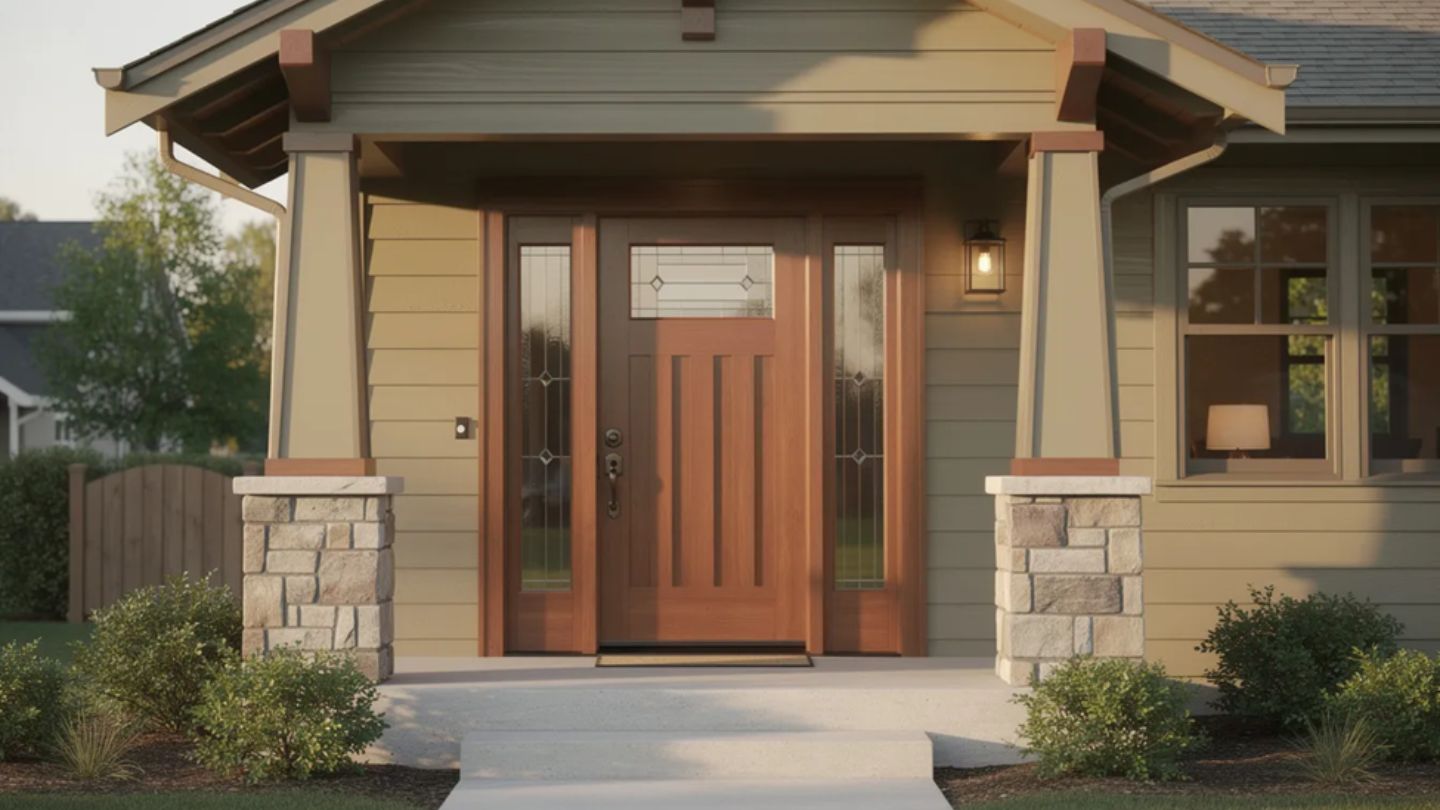
Today’s entry door options go far beyond basic panels and colors. Popular style directions include streamlined modern doors with horizontal glass for contemporary homes, classic 6-panel designs for traditional appeal, and farmhouse doors with large upper glass panels that flood entryways with natural light.
Manufacturers now offer hundreds of glass patterns, grille styles, and hardware finishes. From matte black and satin nickel to aged bronze, you can coordinate your entry hardware with house numbers, porch lights, and mailbox finishes for a unified exterior aesthetic.
For older homes with non-standard openings built before the 1970s, custom sizing ensures your new door fits perfectly without awkward gaps or modifications. Entry door sets that include matching sidelights create a grand entrance that elevates your home’s style significantly.
Modern entry doors include reinforced frames, steel or engineered cores, and heavy-duty hinges that resist prying attempts. These door features provide peace of mind that older doors simply cannot match.
Multi-point locks latch the door at several points into the frame, making it significantly harder to kick in than a basic deadbolt alone. Combined with upgraded strike plates secured by 3-inch screws into wall framing and solid thresholds, these security features transform your entry into a genuine barrier against forced entry.
For doors with glass panels or glass inserts, impact-resistant glass or laminated options allow natural light while eliminating easy break-in points. Good security doesn’t have to look “industrial”—today’s options pair strength with attractive hardware designs and decorative glass that enhance your home’s appearance while keeping your family safe.
Insulated cores, tighter weatherstripping, and high-quality sweeps help block street noise, barking dogs, and traffic sounds. If you live on a busy residential street, near a highway, or close to a school, you’ll notice the difference immediately.
Solid cores and double- or triple-pane decorative glass significantly dampen noise compared with hollow or thin doors installed in the early 2000s. This creates a more comfortable space for everyone—especially households with home offices, naptime schedules, or anyone who simply values a quieter home.
Modern entry doors use insulated cores, tight seals, and advanced glass coatings to reduce heat loss in winter and heat gain in summer. Recognizing how an entry door can help you save on your energy bills reinforces why insulated cores, tight seals, and advanced glass coatings make such a measurable difference.
The difference is tangible: fewer drafts in January, no hot air leaking around the frame in July afternoons. Improved insulation means your heating and cooling systems work less to maintain comfortable temperatures, lowering utility bills month after month.
In regions with four distinct seasons, upgrading an older, uninsulated door can noticeably stabilize indoor temperatures near the entry. That cold spot by the front door? It can disappear with the right replacement.
A properly hung, high-quality door closes smoothly, latches on the first try, and doesn’t rub the floor or frame—even with seasonal humidity changes. Smooth operation isn’t just convenient; it’s a small daily pleasure that adds up.
Updated thresholds, adjustable sill systems, and modern hinges prevent sagging over time. Low-profile sills improve accessibility for strollers, wheelchairs, and rolling suitcases. Proper alignment means locks engage effortlessly, eliminating the frustrating wrestle with a sticky, hard-to-lock door that wastes time during daily comings and goings.
Many homeowners want more natural light and tech convenience, but worry about creating weak points in their main entrance. The good news? Careful glass placement and upgraded components strike the perfect balance between style, privacy, and security.
Understanding glass options helps you make smart choices. Basic single-pane glass offers little in terms of security or insulation. Safer options include:
|
Glass Type |
Benefits |
|
Tempered |
Breaks into small, safer pieces; stronger than standard glass |
|
Laminated |
Holds together when broken; difficult to penetrate |
|
Insulated (IGU) |
Multiple panes with gas fill; excellent energy performance |
|
Privacy patterns |
Frosted, textured, or leaded options obscure views while admitting light |
Consider placing glass panels high on the door or farther from the lockset to reduce risk. A door with glass in the upper third allows natural light into a dark hallway while maintaining security below.
For homeowners wanting privacy without sacrificing light, frosted, textured, or patterned glass works beautifully. Wrought iron details between glass layers add both security and decorative appeal, especially on traditional or Mediterranean-style homes.

Modern hardware choices extend far beyond basic deadbolts. Smart locks connected to smartphone apps offer convenience and security together, allowing remote locking, digital codes for guests or deliveries, and activity logs for families with kids coming and going.
These technologies provide real convenience and security without compromising your door’s appearance. Multi-point locks and reinforced strike plates combine seamlessly with smart features, delivering both safety and modern functionality.
When selecting finishes, tie them to your overall exterior design. Matte black or minimalist hardware suits contemporary homes, while brushed nickel or aged bronze complements transitional and traditional styles. Aluminum-clad options offer durability with refined aesthetics.
A successful door project starts with measuring, budgeting, and timing—not just picking a favorite door style from a catalog. Taking time to plan ensures you get exactly what you want without surprises. Carefully considering essential things to consider when replacing your entry door helps ensure your final selection aligns with your home’s structure, climate demands, and long-term expectations.
Before shopping, rank what matters most to you:
Entry doors span a wide price range depending on material and features:
|
Door Type |
General Price Range |
Best For |
|
Basic steel |
Lower cost |
Budget-conscious, security-focused |
|
Mid-range fiberglass with glass |
Moderate |
Balance of style, efficiency, and durability |
|
Custom wood or premium fiberglass |
Higher |
High-end aesthetics, specific architectural needs |
|
Double door configurations |
Premium |
Grand entrance, wide openings |
A typical replacement project follows this general flow:
Professional installation ensures your investment performs as intended. Improper installation can compromise security, energy efficiency, and longevity—turning a smart home improvement into a costly mistake.
Choosing the right entry door is an investment in your home’s appearance, security, and long-term efficiency. The right material, design, and installation ensure lasting performance while enhancing curb appeal. A thoughtfully selected door creates a welcoming entrance and strengthens protection, comfort, and overall property value for years to come.
At Columbus Door Sales, we specialize in premium entry doors in Powell, delivering expertly crafted solutions that combine durability, security, and beautiful design tailored to your home. We proudly provide residential service and install patio entry doors in Dublin and Worthington. Contact us today to transform your home with a professionally installed entry door built to last.
Fiberglass entry doors typically last 30–50 years, steel doors 20–30 years, and wood doors can match that lifespan with proper refinishing and protection. Climate exposure affects durability, and hardware or weatherstripping may require replacement sooner to maintain performance and energy efficiency.
Fiberglass and steel doors need occasional cleaning and hinge lubrication. Wood doors require annual finish inspections and periodic refinishing to prevent moisture damage. All door types benefit from yearly checks of weatherstripping and thresholds to maintain insulation, security, and smooth operation.
Drafts, visible light around edges, or temperature differences near the doorway signal energy loss. Older doors often lack insulated cores and efficient glass. A professional energy audit or infrared scan can confirm heat transfer issues and determine whether replacement would improve efficiency.
Entry doors can be replaced in nearly any season, usually within a single day. Experienced installers minimize exposure to outdoor temperatures. While spring and fall offer comfortable scheduling, extreme weather rarely prevents professional replacement when handled properly.
Replacing both at once can improve appearance and efficiency, especially if the storm door is damaged or outdated. However, many modern entry doors already include insulation and secure glass, making a separate storm door unnecessary depending on your home’s needs.
.jpg)


