
Contact Columbus Door Sales Today!
Thank you! Your submission has been received!
Oops! Something went wrong while submitting the form.
Fire safety requirements in residential and commercial buildings often create confusion, especially when it comes to garage construction. Many homeowners assume every garage door must meet strict fire standards, but building codes apply differently depending on structure and layout. Knowing what’s required helps avoid costly mistakes and inspection issues. Clear information makes compliance easier. In this blog, we’ll explain when fire-rated garage doors are required and when they are not.
A fire-rated door is a tested assembly designed to withstand fire and limit smoke penetration for a set time—such as 20, 45, 90, or 180 minutes—under standardized laboratory conditions. These ratings aren’t just marketing claims; they’re verified through rigorous testing that simulates real fire conditions.
For garage applications, “garage doors” can mean two different things:
Fire rating rules differ significantly between these two types. Here’s what you need to understand:
This distinction matters because you cannot simply add fire-resistant materials to a standard door and call it rated. The entire assembly must be factory tested and certified as a unit.
In most U.S. and Canadian homes, the large overhead door of an attached garage is NOT required to be fire-rated, but the garage entry door between garage and house must meet specific fire separation requirements.
The International Residential Code (IRC) Section R302.5.1 requires the door opening between a private garage and the dwelling to be one of the following:
All of these options must include self-closing or automatic closing devices. This requirement applies to the pedestrian door between the garage space and habitable space—not typically to the overhead vehicle door at the front of the garage.
This standard has been adopted across 49 states, the District of Columbia, Guam, Puerto Rico, and the U.S. Virgin Islands.
Attached garages pose unique fire risks. They often contain:
When a fire starts in a garage, a properly rated door with a self-closing mechanism provides critical minutes for occupants to escape while preventing smoke and flames from rapidly spreading into bedrooms and living areas.
Fire separation between the house and the attached garage is typically provided by:
Some jurisdictions with higher wildfire or urban interface risk—such as parts of California—may impose stricter requirements on exterior openings. However, this is the exception rather than the national norm. The Wildland-Urban Interface Code may require additional protections on both overhead and entry doors.
Important: Before replacing a garage entry door or converting a garage to living space, call your local building department. Code officials can specify the exact requirement and inspection process for your area, and local codes may have amendments beyond the IRC baseline.
Overhead or rolling fire-rated doors are far more common in commercial, industrial, and multi-family garages than in single-family homes. When you’re dealing with structures where a fire could endanger multiple tenants, customers, or employees, the stakes—and code requirements—increase significantly. Commercial properties benefit from understanding the benefits of installing fire-rated doors in your facility, where rated assemblies help contain fire spread and protect occupants and assets.
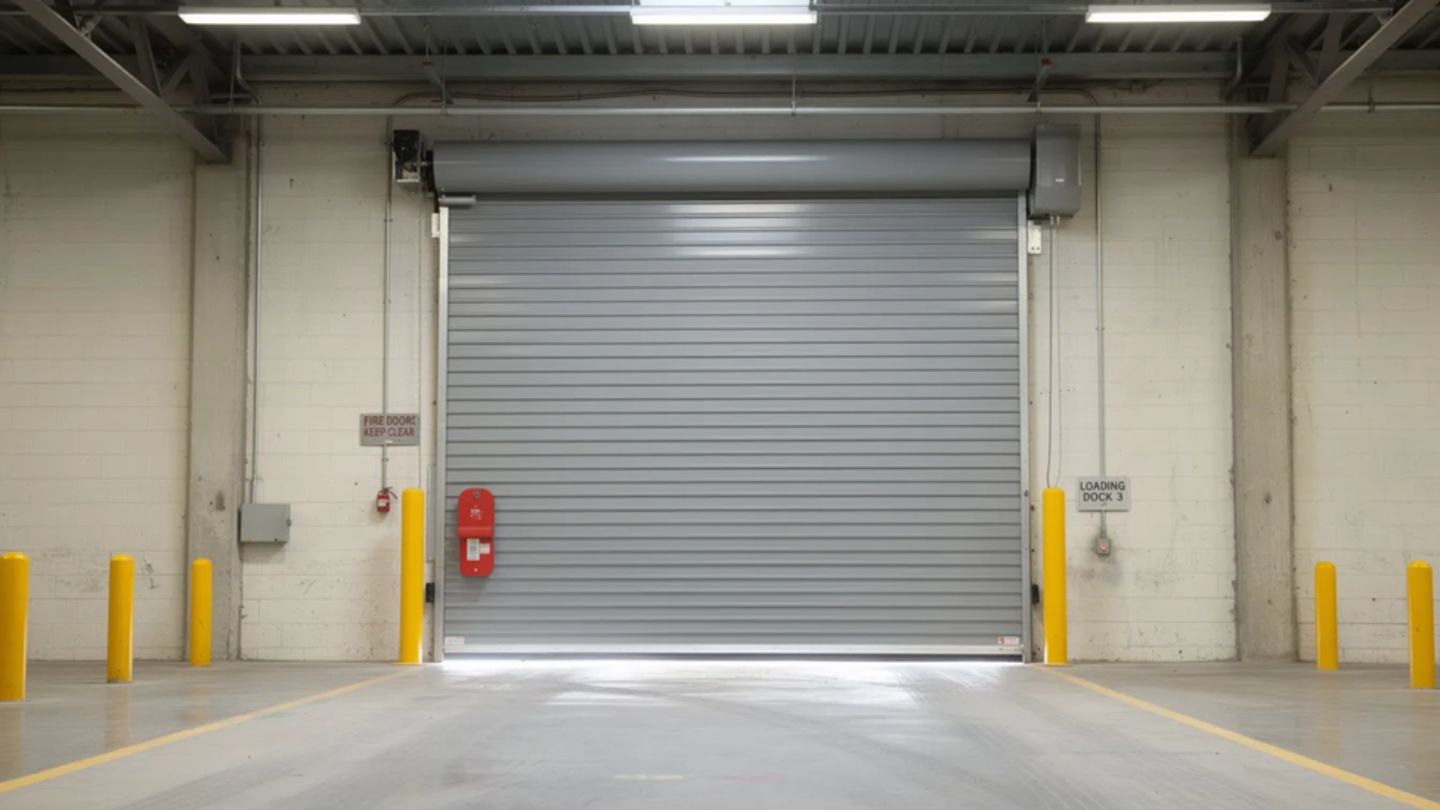
According to the IBC and NFPA 80, fire-rated overhead doors are typically required at:
|
Rating |
Typical Application |
|
20 minutes |
Residential garage-to-house transitions, some corridor openings |
|
45 minutes |
Commercial tenant separations, service doors |
|
60-90 minutes |
Fire barrier openings, commercial corridors |
|
180 minutes (3 hours) |
Firewall openings, high-hazard separations |
|
4 hours |
Reserved for high-hazard industrial applications |
For condos and apartments with shared garages, the authority having jurisdiction (AHJ) may require rated overhead doors at openings between the garage and interior corridors or storage rooms. These doors must bear a permanent label from the testing agency (UL, Intertek/Warnock Hersey) on the curtain or edge showing manufacturer, model, and hourly rating.
Commercial fire doors must meet specific requirements, including:
Interestingly, NFPA data shows that improper clearances account for 60% of audit failures—a reminder that installation precision matters as much as the door itself. Ongoing compliance depends on maintenance details such as how often garage door rollers need to be replaced, since worn rollers can affect clearances and proper closing of fire-rated doors.
You cannot rely on appearance alone to determine if a door is fire-rated. Fire-rated status must be confirmed through labels and documentation—anything less leaves you guessing.
Look for these visual clues on the pedestrian door between your house and garage:
A solid wood or honeycomb core steel door meeting the minimum thickness may satisfy IRC requirements even without a formal fire-rated label, but only the building official can make that determination during final inspection.
For commercial overhead or rolling doors, look for:
If a label has been painted over, removed, or is simply absent:
For older garages built before about 1990: Don’t assume any door is fire-rated unless documentation or labeling is clearly present. Many older homes simply don’t have compliant garage entry doors.
Even when a full fire-rated label isn’t mandated for a dwelling-garage door, choosing a door that meets or exceeds a 20-minute fire rating is smart for life safety. The extra cost is minimal compared to the protection it provides when a fire occurs.
The door must include:
Never install a hollow-core interior door for house-to-garage openings. These lightweight doors can burn through or fail in just minutes, offering virtually no protection when fire protection matters most. They’re designed for interior bedroom or closet applications—not fire separation.
When selecting a door that balances safety and style, understanding things you should keep in mind when choosing garage doors helps ensure you pick materials and features that support fire-resistance and performance. You don’t have to sacrifice style for safety. Today’s fire-resistant door options include:
However, function and code compliance should always come first. Where adjacent walls or ceilings are upgraded to 1-hour ratings (such as a bonus room over a garage), some jurisdictions may want the door to match that rating. Always confirm requirements with your inspector before purchase. Design choices still matter, and how different garage doors add curb appeal to your home shows that safety-focused doors can also complement the overall look of a property.
A fire-rated door only protects as designed when installed and maintained correctly. Improper fire-rated door installation or neglected maintenance can void the rating entirely—leaving you with a false sense of security. Recognizing signs that it’s time to replace your garage door springs is critical because failed springs can prevent proper door closing, directly impacting fire separation and safety between the garage and living space.
For the garage entry door between the house and the garage:
Understanding the effects of cold weather on garage door openers helps explain why fire-rated doors and closing mechanisms must function reliably even during temperature extremes.
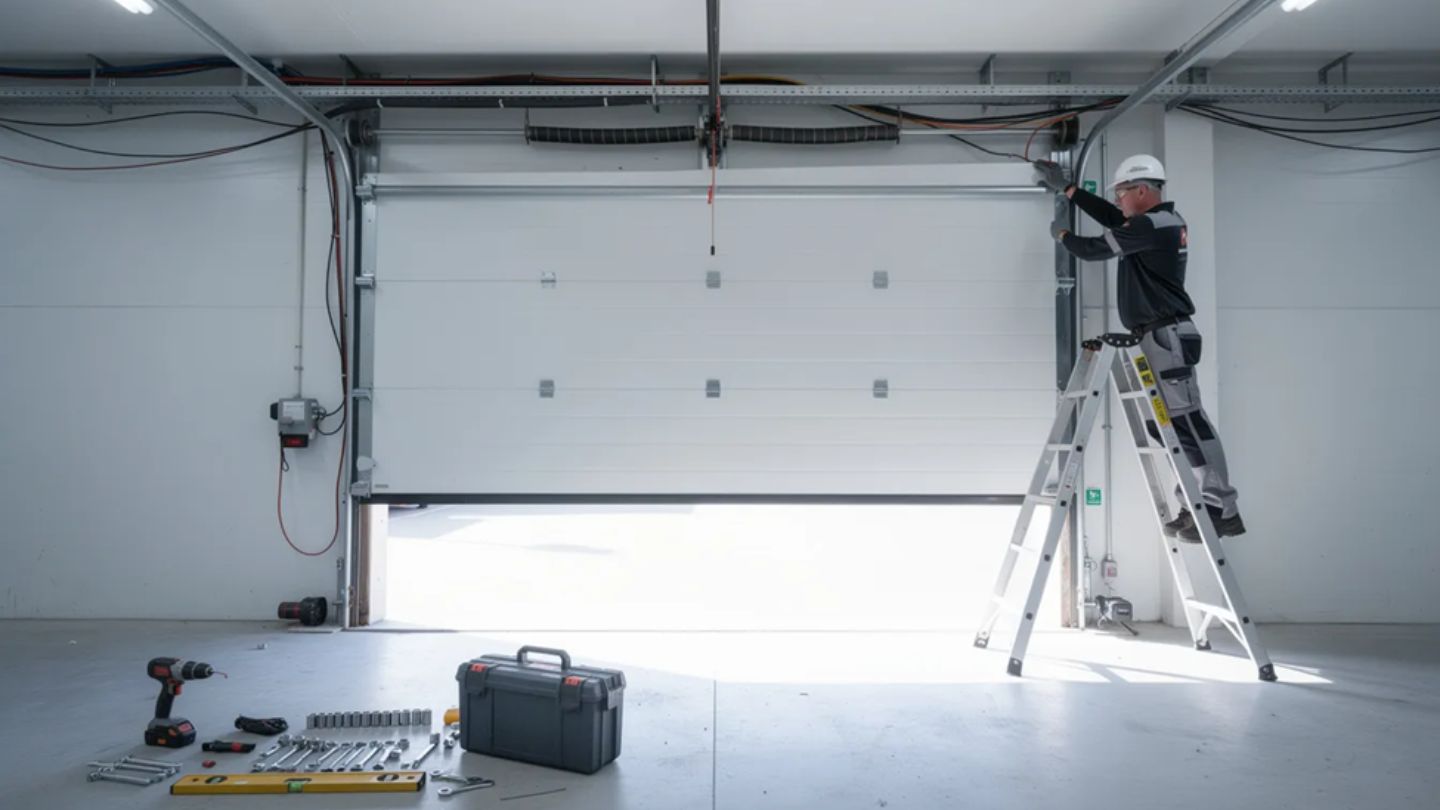
Planning upgrades often raises questions about how long garage door installation takes, especially when fire-rated assemblies require precise installation to maintain code compliance.
Commercial fire-rated overhead doors require:
For residential garage entry doors:
For commercial fire-rated overhead doors:
Fire-rated garage doors are not always required, but understanding when they apply is critical for safety and code compliance. Requirements depend on garage attachment, building design, and local regulations. Knowing the difference helps homeowners avoid unnecessary upgrades while ensuring proper fire separation where it truly matters.
When questions arise, Columbus Door Sales provides knowledgeable guidance and dependable solutions tailored to local requirements. We help homeowners make informed decisions about installation, upgrades, and inspections, delivering reliable service for garage doors in Columbus and Arlington with a focus on safety and long-term performance. From openers and accessories for garage doors, service and repair, garage doors, entry and patio doors, and fire doors, we handle complete solutions under one roof. Take the next step with us and ensure your garage door meets the right standards for safety, compliance, and everyday reliability.
Typically, single-family homes do not require fire-rated overhead garage doors. Fire separation usually applies to the pedestrian door between the garage and the living space. Exceptions may exist for special designs, accessory dwelling units above garages, or local Wildland-Urban Interface regulations.
No. Fire-rated doors must be factory-built, tested, and labeled as complete assemblies. Modifying a standard door with insulation or sheet metal does not create a valid fire rating and will not meet building code requirements or pass inspections.
Removing self-closing hardware usually violates building codes and compromises fire separation. It increases the risk of fire and smoke spreading into living areas if the door is left open. Inspectors commonly flag this issue, so adjustment or replacement is safer than removal.
Most detached garages do not require fire-rated doors because they are not connected to the home. However, local codes, Wildland-Urban Interface rules, or close proximity to property lines or the house may impose additional fire-resistance requirements.
NFPA 80 requires annual inspections by qualified personnel, along with monthly visual checks by building staff. Inspections must confirm proper operation, clearances, intact labels, and no unauthorized modifications. Documentation is required for compliance and often reviewed during fire inspections.
.jpg)


