
Contact Columbus Door Sales Today!
Thank you! Your submission has been received!
Oops! Something went wrong while submitting the form.

Garage door springs do the heavy lifting every time your door opens and closes, counterbalancing the door's weight to ensure smooth operation throughout thousands of cycles. Yet most homeowners never think about their garage door springs until something goes wrong - a loud snap, a door that won't lift, or worse, a serious injury from a broken spring.
Understanding the different types of garage door springs is essential for making a smart, safe decision when it's time for a spring replacement or a new garage door system. This complete guide walks you through the two primary spring types, how they work, and several factors that determine which one is right for your home. Whether you're dealing with a broken garage door spring or planning ahead, this information will help you choose wisely.
Garage door springs serve as counterbalancing mechanisms that carry nearly all of the door's weight. Without properly functioning door springs, your automatic opener would bear the full load, leading to premature wear on other components throughout the door system. Springs work by storing energy - either through twisting or stretching - and releasing it to lift and lower the door smoothly.
Garage door springs are primarily classified into torsion and extension types. Each spring system stores and releases energy differently, mounts in a different location, and carries distinct advantages. Beyond these two main categories, specialized systems like TorqueMaster springs exist as a type of torsion spring, featuring a self-contained design where the spring is enclosed inside a steel tube for added safety and a cleaner appearance. Because springs work alongside other components to support smooth door movement, it is also useful to understand the common garage door repairs homeowners may encounter when maintaining the entire system.
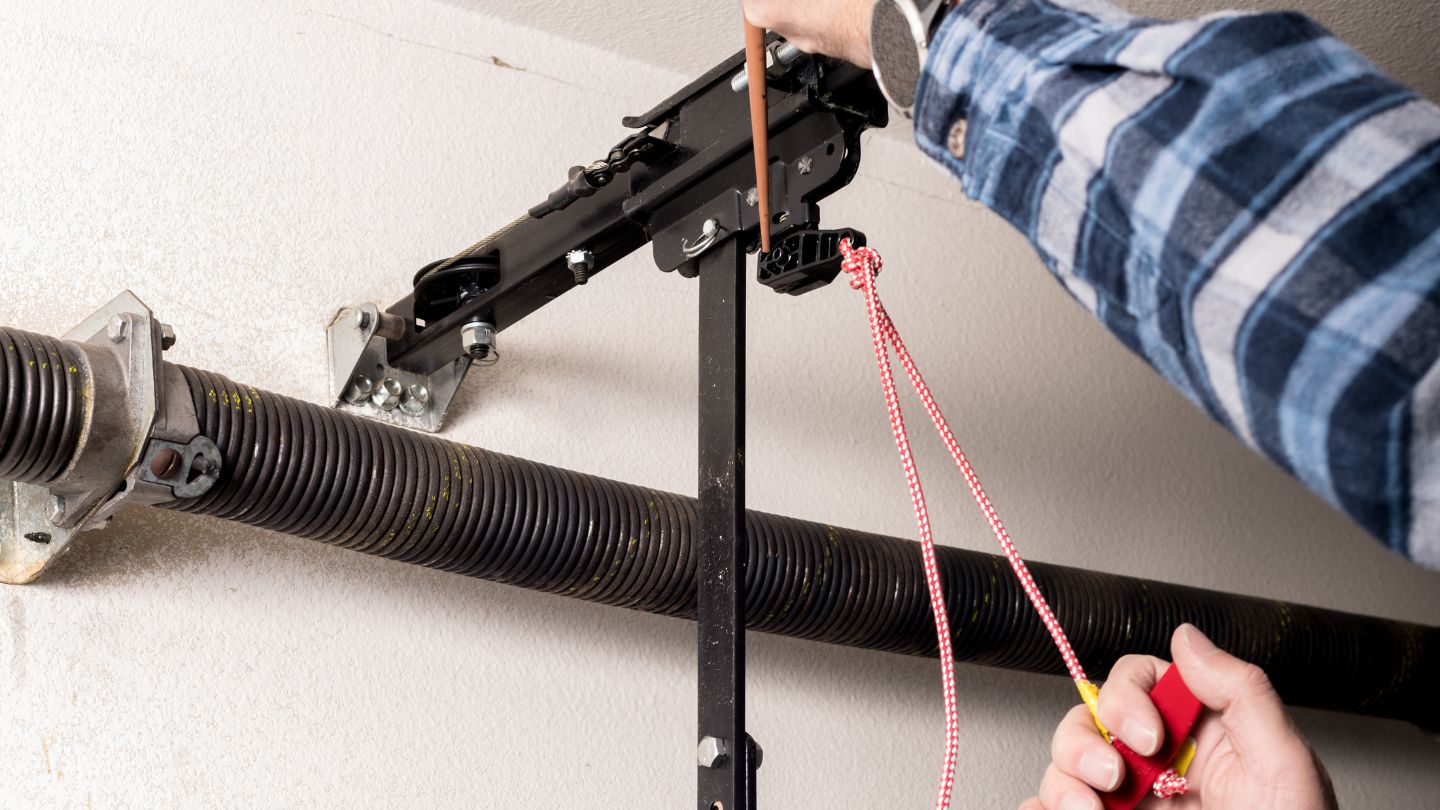
Torsion springs are mounted above the garage door on a metal shaft (called a torsion shaft) that spans the width of the garage door opening. When the door closes, the tightly wound coils store energy through torque. When the door opens, that stored energy unwinds, turning cable drums on each end of the shaft that guide lift cables attached to the door.
Garage door torsion springs are the preferred choice for most modern residential garage doors, and for good reason. Torsion springs typically last 10,000 to 20,000 cycles - with one cycle representing a single open-and-close movement. In terms of calendar time, torsion springs typically last 7 to 14 years depending on usage frequency and environmental factors.
Safety is a major advantage. Because the spring remains on the torsion shaft even if a torsion spring breaks, broken segments are far less likely to become projectiles. Standard torsion springs deliver smoother operation and more even force distribution, which is particularly important for heavier doors. When two springs share the load, balance improves and stress on each individual spring is reduced.
Extension springs run along the sides of the garage door, mounted parallel to the horizontal tracks. As the door closes, each spring stretches to store energy. When the door opens, the springs contract and pull the door upward through a system of pulleys and cables attached to the door.
Extension garage door springs come in several connection styles, including open-looped extension springs, double-looped extension springs, and clip-end variations. Extension springs usually last 5,000 to 10,000 cycles - roughly 3 to 5 years under typical household use.
Safety or containment cables are an important safety feature for extension spring systems. They help contain the spring if it breaks, reducing the chance that the spring or its components will travel across the garage. Proper installation should include the appropriate safety equipment for the specific garage door system and applicable local requirements.
Read More: Types of Garage Door Openers: Belt Drive, Chain Drive, and Direct Drive
Selecting the right spring system starts with understanding your specific door and how your household uses it. Several factors come into play, and getting any one of them wrong can lead to premature failure, uneven movement, or safety hazards.
Door weight is the primary determining factor: Garage door springs should match the exact weight and specifications of the door for proper operation. If you notice that your garage door feels unusually heavy, moves unevenly, or does not remain properly balanced during normal operation, the spring system may not be providing the correct amount of counterbalance. Rather than attempting to measure or adjust the springs yourself, have a qualified garage door technician assess the door's weight, dimensions, and spring specifications to determine the correct replacement. Choose torsion springs for heavier doors, including insulated steel or solid wood models.
Door size and dimensions matter equally: Proper spring size depends on door weight and height. Wider and taller doors require springs with specific wire diameters, coil counts, and inside diameters to generate the correct amount of force. The available space above and around the garage door also influences spring-system selection. Torsion systems are available in configurations designed for different headroom conditions, while extension springs are installed along the horizontal tracks. A professional can evaluate the available clearance and determine which spring configuration is appropriate for your garage. When spring replacement is necessary, choosing among experienced garage door repair companies in Columbus can help ensure the work is handled with the right equipment and expertise.
Usage frequency directly impacts how long your springs will last: A household that uses the garage door multiple times daily will consume cycles far faster than one with occasional use. For frequent use scenarios, investing in higher-quality springs rated for extended cycle life is a smarter long-term decision.
Since spring replacement involves high-tension components, homeowners should also consider these tips for choosing a garage door repair company in Columbus when deciding who to trust with the work.
Read More: The Ultimate Guide to Choosing the Right Garage Door for Ohio's Weather
The material and surface treatment of your garage door springs significantly affect how long they last and how well they perform in your local climate.
Springs are manufactured from spring steel, often oil-tempered springs that have been quenched and heat-treated for durability. Surface coatings - galvanized, powder-coated, or zinc-plated - protect against rust and pitting, which are the primary precursors to fatigue cracks. In regions that experience extreme temperatures and seasonal humidity swings, corrosion-resistant coatings are not optional - they're essential for maximizing spring life.
Standard torsion springs offer reliable performance for typical residential use. High-cycle torsion springs, however, use thicker wire or enhanced steel formulations to achieve dramatically longer lifespans. For homeowners who want a longer lifespan and fewer service calls, higher quality springs with protective coatings represent a smart investment.
Environmental factors like freeze-thaw cycles, moisture, and temperature fluctuations accelerate metal fatigue. For homes in climates with variable weather conditions, selecting springs with appropriate coatings and materials makes the difference between replacing springs every few years and enjoying many years of trouble-free operation.
Garage door springs are under extreme tension and can cause serious injury if handled improperly. This is not a typical weekend project. Professional handling is necessary for garage door spring replacement - the high-tension stored energy in wound or stretched springs requires specialized winding bars, shaft jigs, and anchoring tools that most homeowners do not own. For this reason, homeowners should avoid attempting spring replacement or other high-tension repairs themselves; understanding why DIY garage door repairs can be dangerous reinforces the importance of qualified service.
Improper installation can result in cables unseating from cable drums, springs slipping off the torsion shaft, warped tracks, or catastrophic failure. A professional inspection during installation ensures that every component - from the spring wind direction to bracket positioning - is correct and that the entire garage door system operates in proper balance.
Regardless of the spring type, installation and replacement require careful attention to spring specifications, cable positioning, hardware, and door balance. A trained technician can verify that the complete spring system is correctly configured and that the appropriate safety components are in place. A trained technician verifies that the spring system is compatible with your opener, that force output matches the door's weight, and that all safety features are in place.
Regular maintenance is the simplest way to extend the typical lifespan of your garage door springs and avoid the inconvenience of a broken spring.
Regular lubrication can extend the lifespan of garage door springs, and proactive spring maintenance prevents the kind of sudden failure that leaves your car trapped in the garage on a workday morning. Knowing the warning signs of spring deterioration can also help homeowners address problems before the door becomes difficult or unsafe to operate; understanding when it may be time for a garage door spring replacement can help prevent an unexpected breakdown.
Read More: Why Ignoring Minor Commercial Door Repairs Can Be Costly: Tips to Save Money & Avoid Hassles
Choosing the right garage door spring involves more than comparing torsion and extension systems. The door’s weight, size, available clearance, usage frequency, and existing setup all play a role in determining the appropriate spring. Understanding these factors can help homeowners recognize when a spring system needs attention and avoid relying solely on cost or general lifespan estimates when making a replacement decision.
At Columbus Door Sales, we help homeowners find solutions that fit their garage door and everyday needs. Our residential garage door services include support for spring-related concerns, while our garage door openers and accessories can help keep the entire system working together properly. We also serve broader property needs through our commercial garage door services and offer residential entry and patio doors. If your springs are showing signs of wear or your door is no longer operating as it should, contact us to discuss garage door repair in Columbus and determine the right next step for your system.
Look at where the springs are located inside your garage. Torsion springs are mounted above the garage door opening on a horizontal metal shaft. Extension springs run along the sides of the door parallel to the horizontal tracks. The mounting position is the quickest way to identify your garage door spring types.
Yes, conversion is possible in most cases, though it requires adequate headroom above the door - typically enough clearance to accommodate the torsion shaft, cable drums, and mounting brackets. A professional can assess your garage structure to determine feasibility and ensure the new spring system is properly sized for your door.
Spring lifespan depends on the spring type, quality, door weight, and how frequently the garage door is used. Instead of relying on a specific replacement date, pay attention to signs of wear and have the spring system professionally inspected when the door becomes difficult to operate, moves unevenly, or shows other signs of deterioration.
Watch for popping sounds during operation, visible gaps in the tightly wound coils, rust or corrosion on the spring surface, uneven movement when the door opens or closes, and the door feeling noticeably heavier when lifted manually. Any of these signs warrant a professional inspection.
No. Operating a garage door with a broken spring puts extreme stress on the opener and remaining garage door components, creating a risk of further damage and serious injury. If a spring breaks, avoid using the door and contact a professional for spring replacement immediately.
The correct spring depends on factors such as the door's weight, dimensions, configuration, and expected usage. Because spring sizing requires precise measurements and involves high-tension components, a qualified garage door technician should determine the appropriate spring for your system.
.jpg)


