
Contact Columbus Door Sales Today!
Thank you! Your submission has been received!
Oops! Something went wrong while submitting the form.
Modern garage door openers play a critical role in home security, yet many homeowners overlook how they function and the risks tied to outdated technology. As smart features become more common, understanding potential vulnerabilities is just as important as convenience. Security gaps often stem from old systems or improper setup rather than the opener itself. Staying informed helps reduce unauthorized access risks. In this blog, we’ll explore how garage door openers can be compromised and what steps can help prevent it.
The short answer is yes, garage door openers can absolutely be hacked. However, the level of risk depends heavily on whether your system uses older fixed code technology or newer rolling code openers with smart technology features.
Garage door openers use low-frequency radio waves in the 300–400 MHz range to communicate between your remote and the motor unit. Much like how car radios send songs through the air or how a spoken word travels as sound, these garage door radio waves carry coded signals that tell your door to open or close. Unfortunately, anything traveling through the air can potentially be intercepted.
Early garage door openers from the 1970s through the mid-1990s relied on simple, unchanging codes that remained the same code every single time. This created problems in dense neighborhoods where two homes might accidentally share identical codes, allowing one person to open people’s garage doors without ever intending to. More troubling, criminals quickly figured out they could exploit these systems with basic equipment. Understanding the role of garage doors and openers in home security systems becomes critical when evaluating how radio signals, physical barriers, and smart technology work together to prevent unauthorized access.
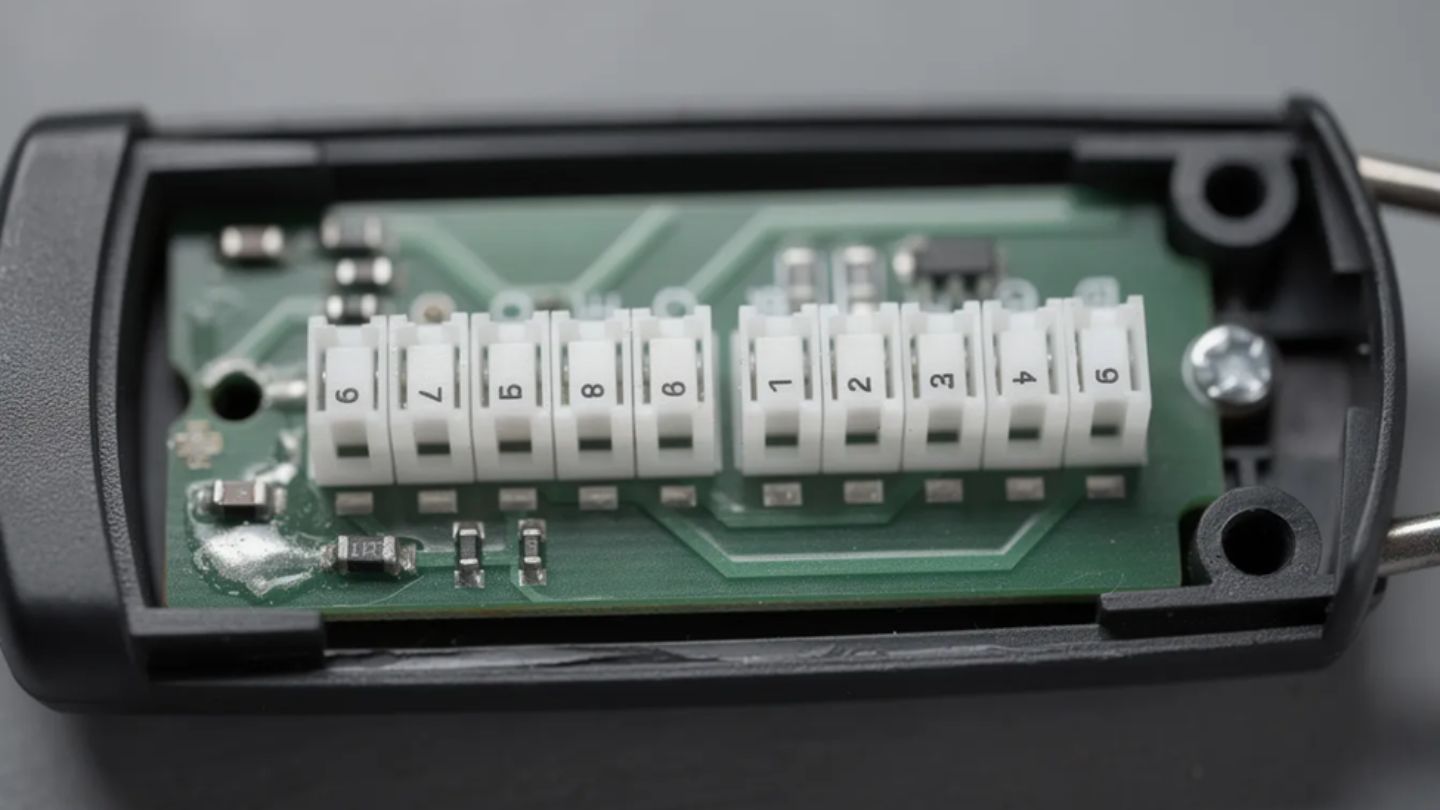
Fixed code garage doors represent the earliest generation of automatic opener technology. If your system was manufactured before roughly 1996–1998, there’s a good chance it falls into this category, and that means your garage door security may be seriously compromised.
Fixed code systems rely on a row of 8–12 small mechanical dip switches located inside both the opener head unit and the handheld remote. These switches inside the units must match exactly for the system to work. Homeowners set the code by sliding each switch to an up or down position, creating a static pattern that never changes.
Here’s where the math becomes concerning:
|
Number of Switches |
Possible Combinations |
|
8 switches |
256 codes |
|
10 switches |
1,024 codes |
|
12 switches |
4,096 codes |
With only a few thousand possible combinations at most, a determined attacker doesn’t need to be a technical genius. Devices that cycle through as many combinations as possible, or simply “listen” once when you press your remote, can reliably crack the correct code and open your door later.
Many fixed code systems operate around 300–433 MHz and appear on older brands, including pre-Security+ LiftMaster units, early Genie models, and older Linear openers.
If you pop open your garage door remote and see a small plastic block with tiny white levers you can slide back and forth, you’re looking at dip switches, and you’re looking at a system that should be upgraded.
The 1970s through early 1990s marked a period when automatic garage door openers became a common household convenience. Unfortunately, the security measures of that era were basic at best, and criminals quickly learned to exploit the weaknesses.
Early systems created unintentional problems before criminals even got involved. Many units shipped from factories with identical default codes set on their dip switches. This meant your neighbor’s remote might accidentally trigger your garage to open, and vice versa. These accidental openings were annoying, but they also revealed a deeper vulnerability.
Burglars initially used cheap “universal” remotes programmed to cycle through common factory codes. Over time, they adopted dedicated brute force technique transmitters that could test every possible combination in a matter of minutes. With only 256 to 4,096 possibilities, finding the correct one didn’t take long. Then came code grabber devices. These units could record the fixed radio signal when a homeowner presses their remote and store that code for later use. No technical skill required, just patience.
Rolling code technology emerged in the mid-1990s as manufacturers’ direct response to code-grabbing and the brute force technique that plagued older garage door openers. This approach fundamentally changed how your remote and on-site employees communicate.
Instead of sending the same code every time, rolling code openers generate a fresh, one-time code with every button press. The opener and remote stay synchronized through an encrypted algorithm, and once a code is used, both devices “forget” it and move to the next in sequence. The number of possible combinations jumps from thousands to billions.
The technical magic works like this: both the remote and opener share a secret cryptographic key. Each button press increments a counter and generates the next code in a massive sequence. The opener only accepts codes that match what it predicts as “next” in line, typically within a small window to account for missed presses. If someone replays an old code, the opener rejects it because it’s already moved past that point.
This proprietary coding system dramatically reduces risk for most homeowners. Drive-by criminals with basic equipment can’t simply record and replay your signal. However, rolling code technology isn’t a guarantee against all attacks; determined, technically capable attackers have found ways to exploit even these systems.
Even rolling code openers can fall victim to sophisticated attacks. While they’re vastly more secure than fixed code systems, tools like rolljam devices have demonstrated practical vulnerabilities in real-world tests. Recognizing the top signs that tell you when to replace your garage door opener helps homeowners avoid relying on outdated systems that lack modern rolling code or network security protections.
A rolljam attack works through clever manipulation. When a homeowner presses their remote for the first time, the device uses a code jamming device to block the signal from reaching the opener while secretly recording that first stored code. The door doesn’t open, so the homeowner naturally assumes they didn’t press hard enough.
When they press the button a second time, the rolljam device captures that second code too, but this time releases the first stored code to actually open the door. The homeowner thinks everything worked normally. Meanwhile, the attacker now holds a still-valid code (the second one) that hasn’t been used yet.
Here’s how the attack unfolds:
Sophisticated attackers might hide a small jammer nearby, tucked in shrubbery, inside a parked vehicle, or even attached discreetly to the garage structure itself. These devices can capture codes over time, waiting for the right moment.
Manufacturers continuously update protocols and firmware to narrow timing windows and reduce rolljam effectiveness. Some newer systems require codes to be used within seconds or include additional verification steps.
The combination of modern opener technology, solid physical security, and smart digital habits creates strong protection against most hacking attempts. Here’s how to build that layered defense. Upgrading equipment should account for key factors to consider when installing a new garage door opener, including encryption standards, smart integration, and firmware update capabilities.
Upgrade outdated equipment. If your opener was installed before the mid-1990s or uses dip switches, replacing it should be a priority. Current rolling code models from reputable brands like LiftMaster, Chamberlain, Genie, or Linear offer better protection dramatically. Look for models advertising Security+ 2.0, Intellicode, or equivalent encrypted rolling code technology.
Choose openers with update capabilities. The latest security feature on many modern openers includes over-the-air firmware updates. This means manufacturers can push security improvements without requiring you to buy new hardware.
Enable built-in security features. Most modern openers include options many homeowners never activate:
Integrate with broader home security. Connect your garage opener to your security ecosystem so activity triggers notifications, camera recordings, or even alarms. When your garage opener communicates with your alarm system, unauthorized access attempts become much more likely to get noticed. Proper system performance also depends on knowing which size garage door opener you need, since underpowered units can strain components and compromise consistent door operation.
Add physical backup layers. Consider these practical additions:
These security measures work together. No single solution provides complete protection, but combining them creates multiple barriers any would-be intruder must overcome.
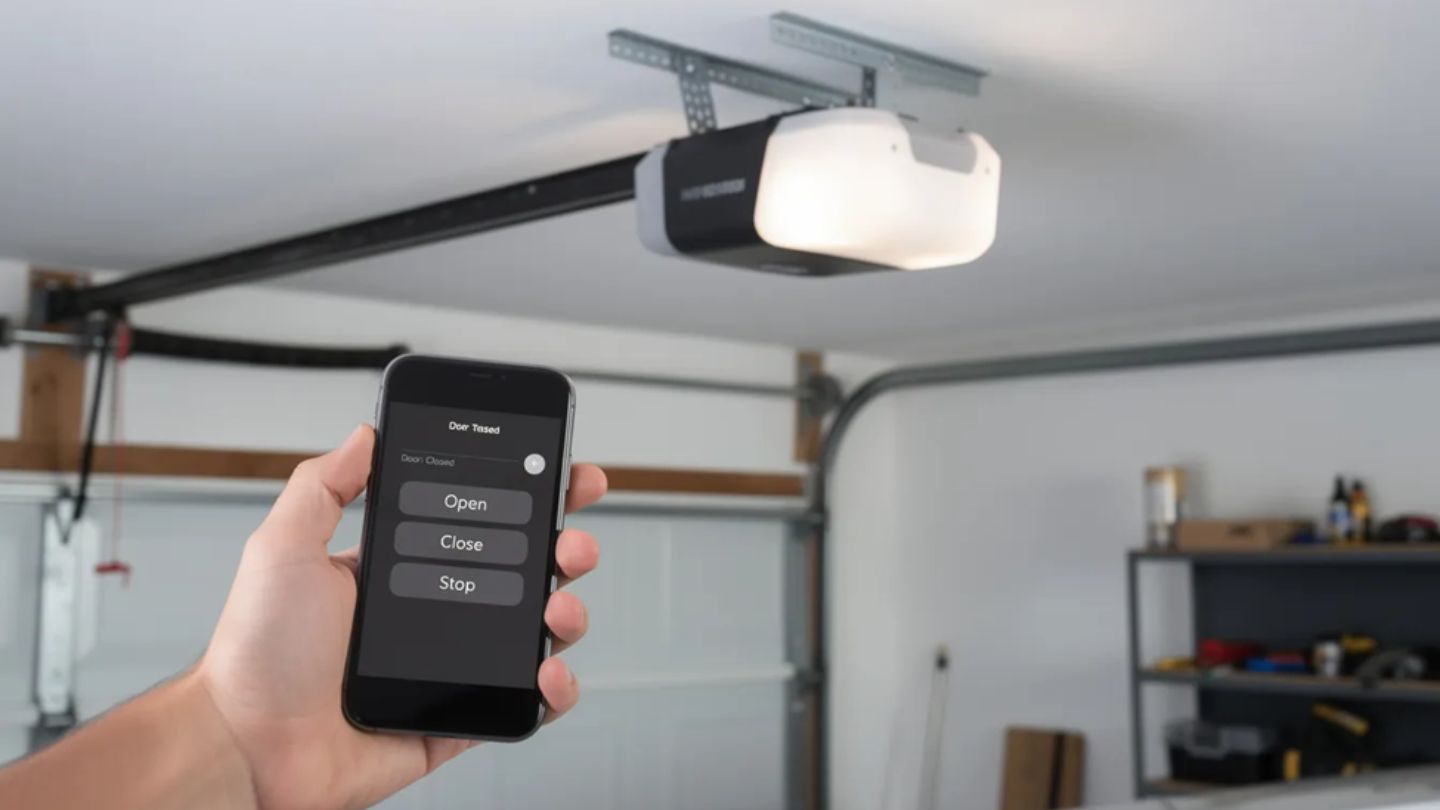
Smart garage door openers like LiftMaster myQ, Genie Aladdin Connect, Nexx, and Tailwind offer incredible convenience, controlling your door from anywhere through your phone. But this convenience introduces a completely different attack surface. With smart technology, your home’s internet connection becomes as important as the opener itself. Seasonal reliability highlights the effects of cold weather on garage door openers, since extreme temperatures can interfere with signal transmission, motor response, and security features.
If your home Wi-Fi or router is poorly secured, attackers don’t need to hack the radio remote at all. They can instead target your network or the app account that controls the opener. In 2023, security researchers discovered that Nexx smart garage controllers had vulnerabilities so severe that an attacker could potentially open someone’s garage door from anywhere in the world, no physical presence required. The researcher found exposed messages from over 500 other devices, complete with device IDs and user information.
Secure your network with these steps:
|
Security Measure |
Why It Matters |
|
Strong, unique Wi-Fi password |
Prevents unauthorized network access |
|
WPA2-AES or WPA3 encryption |
Blocks the interception of network traffic |
|
Changed router admin credentials |
Stops attackers from reconfiguring your network |
|
Disabled remote router management |
Closes potential entry points from the internet |
For your smart garage app accounts, treat them with the same care as your banking credentials. Use strong passwords that avoid common phrases, family names, pet names, or short passwords that can be easily guessed. Many people in their immediate family share access, but avoid giving app credentials to anyone you wouldn’t trust with a house key. Enabling two-factor authentication or multi-factor authentication provides an extra layer of protection whenever the manufacturer offers it.
Many burglaries still happen through surprisingly low-tech methods. An unlocked door, a dark approach, or a few minutes of privacy is often all a thief needs. Basic physical security remains essential in our daily lives, working alongside digital protections to increase garage door security. Security and durability decisions are reinforced by things you should keep in mind when choosing garage doors, as door construction, materials, and fit all affect resistance to forced entry and tampering.
Keep the door closed and locked. This sounds obvious, but many break-ins happen simply because a garage was left open while the homeowner was in the backyard, at a neighbor’s house, or running a quick errand. Visible contents, tools, bikes, and even holiday decorations advertise what’s available to opportunistic criminals.
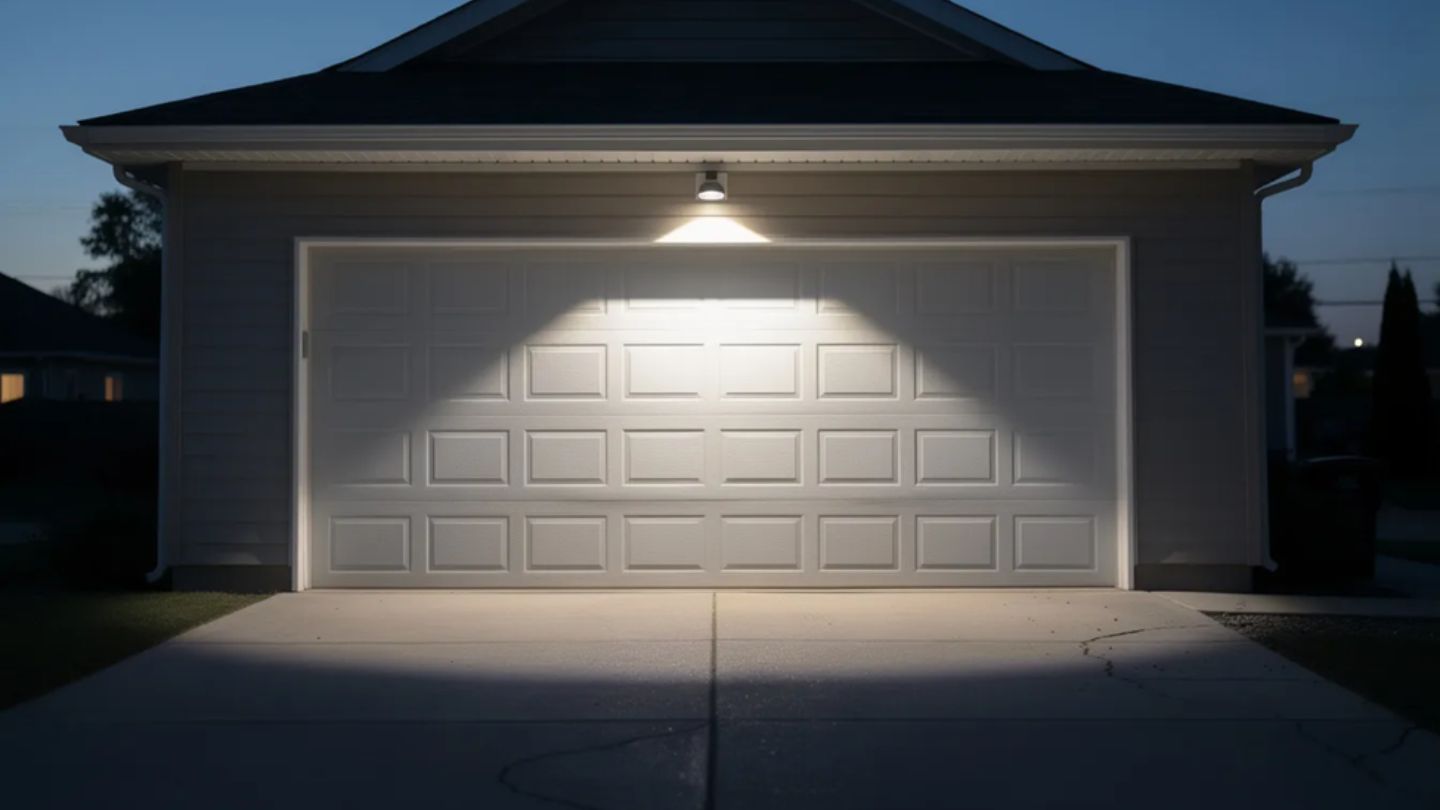
Install motion-activated LED lights. Bright lighting eliminates the shadows where someone could tamper with your door or opener unnoticed. Focus on:
Add visible security cameras. Install security cameras or a video doorbell watching your driveway and garage entry. Configure them to send alerts for motion events, especially at night. The visible presence of cameras alone deters many would-be intruders, and if something does happen, you’ll have footage.
Reinforce the interior door. The door between your garage and living space deserves the same treatment as your front door. Install a solid core or metal door with a deadbolt and reinforced strike plate. This creates a critical second barrier if someone manages to enter the garage.
Perform regular maintenance checks. A well-maintained door is also a more secure door:
Older garage door openers, in particular, may have worn components that create vulnerabilities beyond just their outdated radio technology. Regular professional inspections catch issues before they become problems.
Don’t leave remotes in vehicles parked outside. A thief who breaks into your car gains immediate access to your garage if they find your remote. Consider a keychain-sized remote you carry with you, or rely on a smartphone app instead.
Garage door openers can be hacked, but the real risk depends on outdated technology, weak passwords, and neglected security features. Understanding how vulnerabilities occur allows homeowners to take proactive steps, upgrade when needed, and protect one of the most common access points to the home more effectively.
When it’s time to improve security, Columbus Door Sales offers trusted solutions designed around safety and reliability. We help homeowners protect their property with professional upgrades, inspections, and dependable garage door repair service in Dublin, tailored to modern security needs. From openers and accessories for garage doors to service and repair, our team delivers complete solutions. We also provide durable, well-fitted patio entry doors in Dublin, Arlington, and Worthington that enhance security, functionality, and everyday access for your home. Contact us today and work with us to strengthen your garage door system and keep your home secure with confidence.
Yes. Openers installed before the late 1990s often use fixed code technology, which is easier to intercept. If your remote has dip switches, the system is outdated. Even late-1990s models may lack modern protections, so a professional evaluation is strongly recommended.
Not directly, but weak passwords, unsecured Wi-Fi, or flawed manufacturer apps can be exploited. Hackers may gain access through stolen credentials or software vulnerabilities. Using strong passwords, keeping apps updated, and enabling two-factor authentication greatly reduces the risk of unauthorized access.
Modern keypads with rolling code technology are secure, but poor PIN choices create risk. Simple or meaningful codes are easier to guess or observe. Change your PIN regularly, avoid obvious sequences, and cover the keypad when entering your code.
No. The opener technology faces the same hacking risks regardless of location. The main difference is impact; attached garages may allow home entry, while detached garages protect valuables. Both require the same level of security and regular updates to prevent unauthorized access.
.jpg)


