
Contact Columbus Door Sales Today!
Thank you! Your submission has been received!
Oops! Something went wrong while submitting the form.


If your garage door suddenly feels heavier than usual, moves unevenly, or makes sounds you have never heard before, there is a good chance the cables are trying to tell you something. So how do you know if your garage door cables are wearing out? The answer comes down to paying attention to a handful of visual and performance clues that show up well before a complete failure occurs.
This blog walks you through the clearest warning signs of cable wear-what to look for, what to listen for, and how the door itself behaves when cables are losing integrity. You will also learn why these steel cables matter to the entire garage door system, when to schedule professional service, and what a trained garage door technician typically checks during an inspection.
Garage door cables are braided steel cables that connect the bottom brackets of your door to cable drums or pulleys at the top. Together with the spring system, these cables support the door's weight and allow it to rise and lower in a controlled, balanced way. Cables help raise and lower doors weighing anywhere from around one hundred to several hundred pounds, so they carry a significant load every time the door is in motion.
On a standard residential overhead door, you can usually see the two cables running along each side of the track-from the bottom corners up toward the top hardware. In torsion spring setups, the cables wind around drums above the door opening. In extension spring systems, they route through pulleys near the horizontal tracks.
Over time, repeated open-close cycles, environmental exposure, and normal aging wear down the individual strands inside each cable. Moisture, road salt, and temperature swings-common throughout Central Ohio winters-speed up that process. As cables wear, the door's weight distribution shifts: the door feels heavier, your opener strains harder, and components that were once properly aligned begin to drift. What starts as minor strand fatigue can cascade into a malfunctioning garage door if the early signs go unaddressed.
Your garage door system is a network of interdependent parts. Cables transmit force from the springs, springs counterbalance the door's weight, drums control cable winding, and tracks guide the door panels. When one part weakens, the rest compensate-and that compensation shortens their lifespan too.
Spring tension directly affects cable load. If a cable on one side has stretched even slightly, that side of the door lags during travel. The opener motor works harder on every cycle, the opposite spring absorbs more stress, and rollers begin wearing unevenly against the track edges. Over weeks or months, what began as a minor cable issue can lead to a crooked garage door, premature spring wear, or an opener that overheats.
Spotting cable wear early protects the entire system. A timely professional cable replacement prevents the kind of collateral damage that turns a straightforward cable repair into a multi-component overhaul.

A careful visual check from a safe distance can reveal clear signs of wear long before a cable snaps. Garage door cables show physical and mechanical signs of wear before they snap completely, so knowing what to look for gives you a real advantage. Remember: homeowners should only observe. Any adjustment or replacement should be performed by a professional.
Frayed cables are one of the most recognizable warning signs. When individual wire strands begin to separate and stick out, the cable takes on a fuzzy or "hairy" appearance-especially near high-stress points like the bottom bracket or the edge of the drum. Frayed strands indicate that the cable is compromised and must be replaced.
Flattened spots, kinks, or birdcage-like bulges along the cable are equally serious. These deformations suggest internal strand fatigue or breakage that may not be visible everywhere yet. Any visible damage along the cable's length is a strong indicator that the cable is nearing the end of its useful life. Cables must be replaced if they show visible fraying or rust; there is no safe "wait and see" period once broken strands appear.
Surface rust often begins where the cable contacts metal hardware or is exposed to moisture: bottom brackets, drum rims, and the underside of the door. It typically appears as reddish-brown staining or pitting on what should be shiny steel. Heavy rust or corrosion on cables can weaken their structural integrity over time, even if the cable still looks mostly intact from a distance.
Garages that see road slush, deicing chemicals, or persistent humidity are especially vulnerable. Even galvanized coatings lose their protective qualities once worn through. Rust around anchor points and drums is particularly concerning because those are the highest-stress areas.
When the door is in the closed position, cables should appear straight, taut, and neatly wrapped around the drums. If a cable droops away from the track, hangs in a loop near the floor, or bunches unevenly on the drum, something has gone wrong. A loose cable suggests a tension problem needing attention-the cable may have slipped off its drum, stretched beyond its working range, or lost proper cable tension.
Slack or loose cables indicate that they have lost tension or slipped, and continued operation in that state increases friction, accelerates further damage, and can cause the door to bind in its tracks. Do not attempt to re-wrap or tighten cables on your own. Garage door cables operate under extreme tension from springs, and mishandling them risks serious injury. Instead, schedule a professional inspection.
Sometimes you will notice how the door operates differently before you ever see visible cable damage. Paying attention to everyday performance changes is one of the best ways to catch cable issues early.
If you disconnect the opener using the emergency release and find that the door feels noticeably heavier than it used to, the cable or spring system may be compromised. Stretching, internal strand breakage, or a cable that has partially slipped off a drum can all reduce the counterbalance support that normally makes a heavy door feel light. A heavier-feeling door is not something to muscle through-it is a signal to stop and call for a professional evaluation.
A garage door should rise and lower evenly, staying level from side to side throughout its travel. When a door hangs crooked-one bottom corner higher than the other, or one side lagging behind-cable wear is a frequent culprit. An uneven or crooked garage door can signal issues with the cables, particularly if one cable has stretched or partially failed while the other remains intact.
A door that moves in short bursts, jerks mid-travel, or suddenly stops and reverses often has a cable or balance issue. This kind of motion can mean a cable is slipping on its drum or that one side of the spring system is pulling harder than the other. The opener's built-in safety systems may sense the abnormal resistance and pause or reverse the door automatically. Mechanical problems involving worn cables, misaligned tracks, or faulty safety sensors are among the common reasons a garage door won't close, making professional inspection important when the door repeatedly stops or reverses.
Repeated hesitations should not be ignored. They are an early warning sign that the system is compensating for mechanical wear-and that wear tends to get worse, not better, with each additional cycle.
New or worsening loud noises during door travel deserve attention. Scraping sounds often come from a cable rubbing against hardware when misaligned or partially off its drum. Grinding near the top corners may indicate cable strands wearing against drum edges. Sharp snapping or popping sounds can signal an individual strand breaking-sometimes the last warning before a cable snaps entirely.
Strange noises often indicate problems with garage door cables or related hardware. Pay attention to where the sound seems to originate-top corners, side tracks, or near the opener rail-and share that detail when you report the issue to your technician.
Cable wear does not always announce itself on a random Tuesday. It tends to become noticeable during specific conditions or usage patterns.
Households that open and close the garage door many times each day put far more stress on cables than the average home. If your garage is your primary entrance, your cables endure double or triple the typical cycle count. That accelerated use shortens the window between early signs and potential cable failure. Regular maintenance check-ups are especially valuable for high-use doors.
Extended exposure to moisture, road spray, ice, and temperature swings promotes rust and corrosion along cables and brackets. After a harsh winter or a particularly wet stretch, homeowners may notice more visible rust, louder operation, or sluggish movement. Planning a garage door upgrade during summer gives homeowners an opportunity to address weather-related deterioration and replace aging components before another season of harsh conditions. These are ideal times to schedule a maintenance visit so a professional can catch corrosion before it compromises the cable.
Replacing torsion springs, rollers, or an opener can actually make underlying cable wear more obvious. When the rest of the system runs smoother and quieter, a worn cable's shortcomings-slight imbalance, faint grinding, minor slack-stand out in contrast; whenever major garage door parts are serviced, ask the technician to inspect the cables at the same time. Replacing both cables at once is often recommended for balance, so addressing them alongside other work can save time and prevent a return visit.
Garage door cables and springs operate under high tension. Attempting to repair garage door cables without proper training can be dangerous. Cables under high tension can cause serious injury if mishandled, so every repair and replacement recommendation in this article points to trained technicians using proper tools and safety protocols.
Proper cable tension is crucial for smooth door operation. When both cables carry equal load and spring tension matches the door's weight, the door travels evenly, the opener runs efficiently, and all components wear at the same rate. Professional balancing ensures that cables, springs, drums, and brackets work together as designed. Improper tension-from incorrect cable length, wrong routing, or mismatched springs-can cause sudden movement, recurring misalignment, or opener strain.
Balanced cables prevent uneven movement and strain on components, while correct cable tension also reduces noise and improves overall performance. This is not a job for guesswork; it requires hands-on expertise.
A service visit for suspected cable wear goes well beyond looking at the cables themselves. Technicians inspect both cables for fraying, rust, kinks, and correct wrapping around drums. They examine bottom brackets, cable anchors, springs, rollers, hinges, and tracks. Professional garage door service involves more than lubricating moving parts, as technicians also evaluate cable tension, door balance, hardware condition, and the overall safety of the system. They compare left-side and right-side tension to identify imbalance-because most cable repairs involve evaluating the entire system, not just one strand.
Based on what they find, the technician may recommend immediate professional cable replacement or closer monitoring over time. They may also flag other garage door parts that are wearing concurrently-such as a weakening spring-so everything can be addressed in one visit rather than spread across multiple emergency repairs. Professional cable replacement typically takes under a couple of hours to complete, and replacing both cables at once helps maintain door balance.
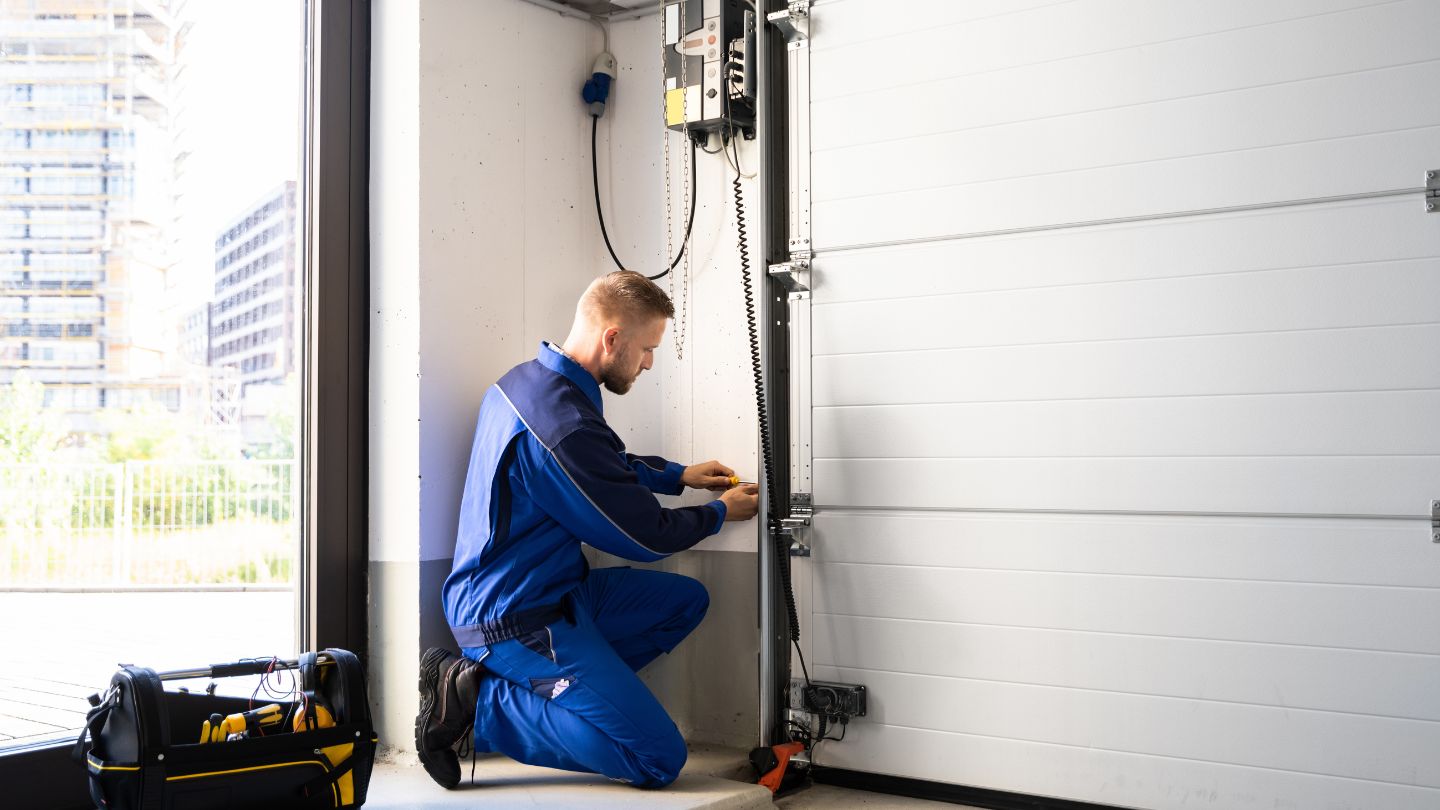
Scheduled maintenance is the most reliable way to catch cable wear before it disrupts your daily routine. Regular garage door maintenance helps identify worn cables, weakened springs, and other mechanical concerns before they develop into serious safety risks or unexpected door failures. Recognizing early signs of cable wear can prevent sudden snaps and injuries, and a trained eye spots things that most homeowners would overlook.
A routine garage door service appointment typically includes visual inspection of all cables along their full length, balance testing to confirm even door travel, lubrication of moving parts like rollers and springs, and tightening of hardware at brackets, drums, and tracks. Cables are examined for fraying, rust, proper alignment on drums, and secure attachment at the bottom brackets.
Inspection should include checking for fraying, rust, and slack in the cables, and a good technician will also answer any questions you have about what to watch for between visits.
Between professional visits, pay attention to small changes. Listen each time the door operates-new grinding, metallic rubs, or popping sounds are red flags. Watch the door from the driveway as it opens and closes: does it travel level? Are there gaps at a bottom corner? Do the cables look uniform and taut on both sides when the door is in the closed position?
Visual inspection of garage door cables can identify signs of wear safely from a distance. After heavy rain, snow, or freezing conditions, take a quick look at the cables and brackets for new rust or discoloration. If anything seems off, contact a professional promptly rather than waiting for the cable to fail completely. A door that drops unexpectedly signals serious cable failure and can be a genuine safety hazard.

Garage door cables play an essential role in keeping the door balanced and operating safely. Fraying, rust, visible damage, or uneven movement can indicate that the cables are wearing out. Recognizing these warning signs early and arranging a professional inspection can help prevent sudden failures, additional damage, and safety hazards.
At Columbus Door Sales, we provide professional garage door maintenance in Dublin to identify worn cables and address potential problems before they affect door performance. Our team also serves Upper Arlington, Columbus, New Albany, and Powell, offering reliable garage door inspection, maintenance, and repair services. Contact us today to schedule professional assistance.
Look for frayed wires, rust or discoloration, and cables that appear slack or unevenly wrapped on the drum. Listen for grinding, popping, or scraping during operation, and watch whether the door moves level from side to side. These are observation tips only-if anything looks or sounds off, schedule a professional inspection rather than attempting any adjustments yourself.
No. Once you see visible fraying or significant rust, the cable's structural integrity is already compromised. Continued use risks a snapped cable, which can cause the door to drop unexpectedly, damage other components, or lead to serious injury. Stop using the door and contact a technician as soon as possible.
Yes. When cables are worn, stretched, or loose, the door becomes unbalanced, and the opener must work harder to move it. Over time, this extra strain can overheat the motor, wear down internal gears, and cause the opener to reverse or stop unexpectedly. Addressing cable wear early helps protect the opener and other connected components from premature failure.
An annual professional inspection is a good baseline for most households. If your garage door is your main daily entrance, or if you live in an area with harsh winters, moisture, or road salt exposure, consider scheduling service twice a year. Regular maintenance catches cable wear and other issues before they turn into urgent problems.
Describe exactly what you have observed: fraying, rust, loose or slack cables, the door hanging crooked, a heavier-than-normal feel, or any unusual noises during operation. If a recent weather event or impact may have contributed, mention that too. Photos or short videos can be helpful. Sharing specific details allows the technician to prepare the right parts and focus the inspection on the areas that matter most.


