
Contact Columbus Door Sales Today!
Thank you! Your submission has been received!
Oops! Something went wrong while submitting the form.

Replacing your entry door is a significant home improvement project that directly impacts your home’s security, energy efficiency, and curb appeal. Before you invest in a new entry door, asking the right questions upfront can save you thousands in costly mistakes and ensure you select the perfect door for your Central Ohio home. This door-buying guide references recent exterior door installations in Central Ohio and verifies that the installer will obtain required permits and schedule inspections. This blog walks you through every critical question you need answered before signing a contract.
Before choosing a door, ask yourself: what’s the single most important reason I’m replacing my front door? Your answer shapes every decision that follows.
If security is your top priority, you’ll focus on solid core materials, reinforced frames, and multi-point locking systems that secure the door at multiple points to prevent forced entry. A five-lever mortice lock is a recognized standard for enhancing door security, and a high-quality deadbolt with at least a one-inch throw, combined with a reinforced metal box strike, provides maximum protection.
If energy efficiency drives your decision, you’ll prioritize insulated cores, proper weather stripping, and Energy Star certification. Understanding how an entry door can help you save on your energy bills can also help homeowners focus on insulation quality, proper sealing, and professional installation before making a replacement decision. Doors can account for up to 11% of heat loss in American households, making energy-efficient doors crucial for reducing heating and cooling costs.
For curb appeal, you’ll emphasize style, color, hardware choices, and decorative glass accents that enhance your home’s exterior. Entry doors can be customized in various styles, traditional, modern, and ornate designs, allowing you to select a door that complements your home’s architecture perfectly.
If damage repair forced this decision, examine whether your old door truly needs full replacement or if targeted repairs might extend its life cost-effectively.
Read More: How a Front Door Enhances Your Property Value: The Complete Guide to Maximizing ROI
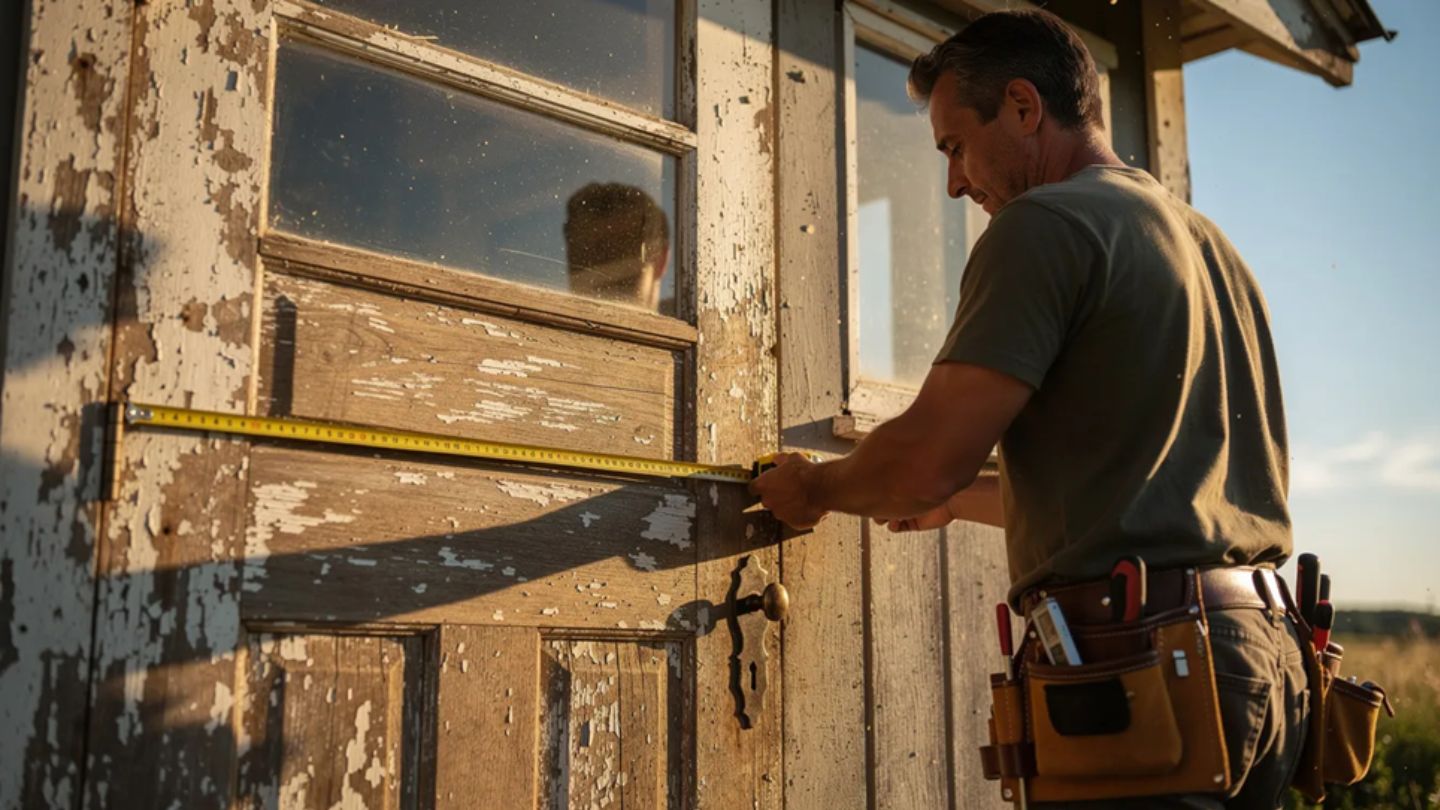
Your exterior door is telling you it needs replacement when you notice persistent drafts or cold spots despite weather stripping repairs. Visible damage, such as rot at the bottom rail, cracks, soft wood, or peeling finish, signals deterioration beyond repair.
When your door sticks, sags, or no longer closes flush, warping has compromised its structure. Obsolete hardware, single-bolt locks, thin hinges, or weak door frame construction indicate security vulnerabilities. Air leaks around edges increase energy costs significantly over time.
Comparing repair costs and remaining lifespan with the full replacement cost and expected service life helps determine the financially sound choice for your door replacement project.
Understanding what your investment actually covers prevents the frustration of unexpected expenses. The average door installation cost in Columbus ranges from $800 to $ 4,800, depending on door type, material, and labor complexity.
Before purchasing a new entry door, consider whether you need a simple door slab or a full pre-hung unit, which includes the frame and hinges. Understanding the key factors to consider when replacing your entry door can make it easier to compare materials, installation requirements, energy efficiency, security, and overall long-term value. Requesting a detailed written bid or proposal from your contractor ensures clarity on all aspects of the job, helping to prevent misunderstandings during the installation process.
Complete quotes should explicitly include the door unit cost (slab, glass, hardware, finish), frame and jamb assessment, and any necessary repairs, professional installation labor, weather seals, thresholds, and flashing, removal and disposal of your old door, and permitting fees (typically $150–$500 in Columbus).
Material choices drive significant cost differences. Steel doors typically run $400–$1,200 installed for basic models, the most budget-friendly option. Fiberglass doors range from $800 to $2,500 installed, depending on quality. Wood doors command premium pricing at $1,000–$4,500 installed, representing the most expensive option for materials.
Watch for incomplete quotes that exclude frame repair, structural modifications, remediation of rot in surrounding walls, or matching exterior trim work. Custom doors requiring non-standard sizing add both lead time and cost.
Disposal fees for your old door, finishing interior trim, painting or staining after installation, and reinstalling storm doors all represent potential additional expenses. Labor costs in Columbus run approximately 14% above the national average, so factor this into your budget planning.
Energy rebates or tax credits may offset some of the investment when using Energy Star-certified doors that meet the U-factor requirements for Climate Zone 5A. Ask about the qualification during your estimate.
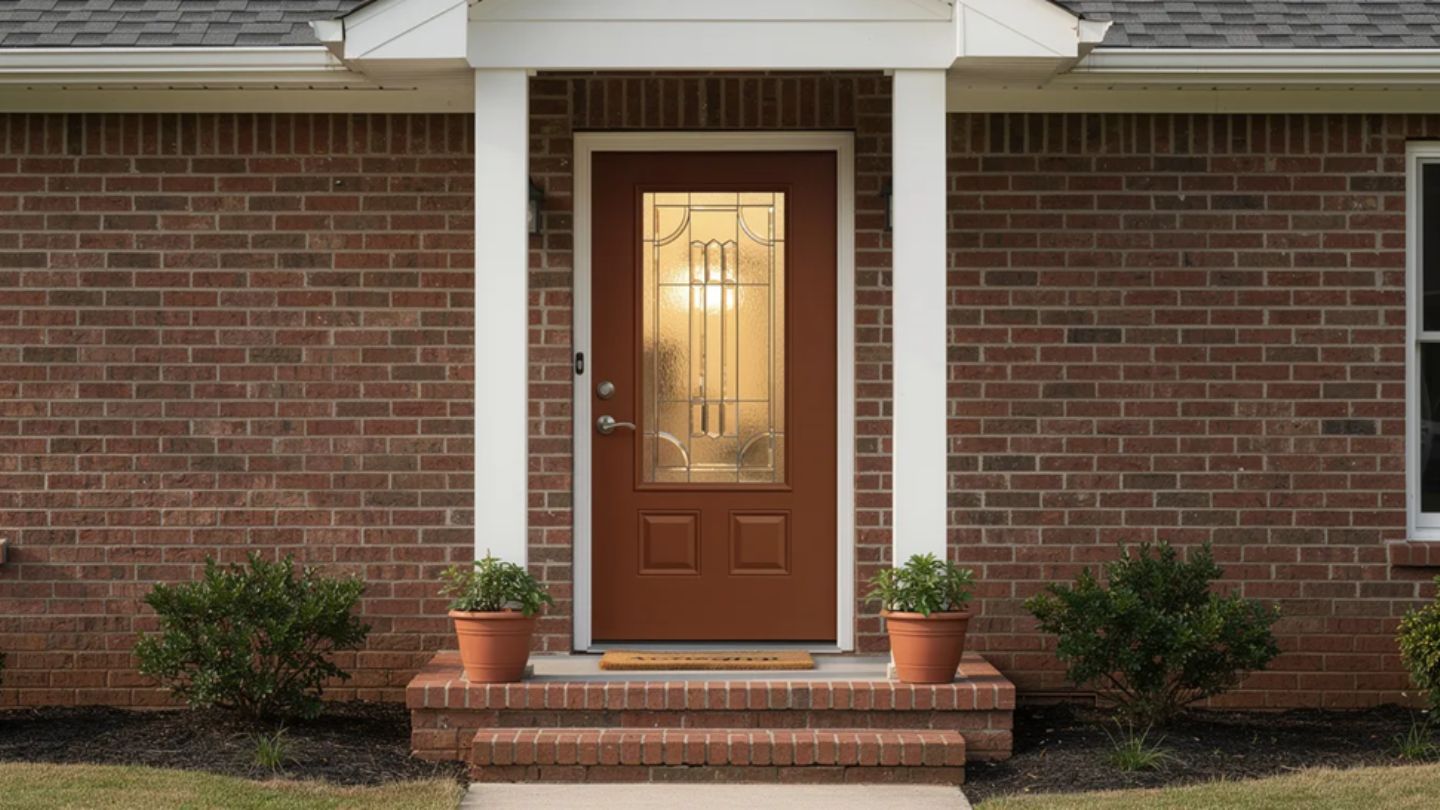
Central Ohio’s Climate Zone 5A brings cold winters with freeze-thaw cycles, humid summers, and significant temperature swings. Different materials perform dramatically differently under these demanding conditions.
Fiberglass doors are typically the best all-season option due to their resistance to warping, moisture, and temperature swings. They maintain their shape and finish through seasonal changes, require minimal maintenance (annual cleaning, occasional touch-ups), and offer lifespans of 30+ years. Well-insulated fiberglass entry doors with foam-injected cores provide better insulation than traditional alternatives.
Steel doors deliver durability and security at a lower initial cost, making them popular for homeowners seeking long-lasting protection. However, steel is prone to dents, scratches, and rust if the protective finish is compromised. Look for doors with Energy Star certification and foam-injected cores for improved thermal performance.
Wood doors offer classic charm and extensive customization but may warp in high humidity and require more frequent maintenance, such as sealing or painting every 2–3 years. Knowing how to prevent your entry door from warping is especially helpful when comparing materials for humid summers, freeze-thaw cycles, and long-term performance. While aesthetically pleasing, wooden doors require more maintenance than fiberglass and steel options, especially in climates with freeze-thaw cycles.
For energy efficiency, well-insulated doors, such as insulated steel or fiberglass doors, often outperform traditional wooden doors due to their higher R-values of 5 to 6. Foam-core insulation enhances insulation, improving U-factors. Effective weather stripping and insulated cores minimize energy loss from air leaks and prevent hot or cold air from escaping.
Read More: Choosing the Right Doors for Your Home: Energy Efficiency, Security, and Style Considerations
Hiring professionals for door installation ensures a precise fit, which is vital for maximizing the door’s performance and preventing issues such as drafts and water leaks. Improper installation of an exterior door can lead to significant problems, including increased energy costs due to air leaks and potential security vulnerabilities.
Ask every prospective installer: Are you registered as a home improvement contractor in Ohio? Do you hold a Home Improvement Limited Contractor license specializing in “Windows, Doors, Siding” as required in Columbus? What liability insurance coverage do you carry, and are you bonded?
Ohio requires residential contractors to register under House Bill 614, effective January 2026, and to maintain commercial general liability insurance and a $25,000 surety bond. Columbus specifically requires that limited contractors have at least 1 year of hands-on experience in their specialization.
Professional installation often comes with warranties that provide peace of mind for future issues, which is not typically available with DIY installations. While DIY door replacement is possible, it can be challenging without professional help, as it requires specific skills and tools to ensure proper installation.
Request references from recent new exterior door installations in Central Ohio, and verify the installer will pull required permits and schedule inspections.
Choosing a door that complements your home’s architecture, colonial, craftsman, Victorian, ranch, or modern, ensures your new front door enhances rather than clashes with your home’s curb appeal. Homeowners who want to transform their home with the right entry door should consider how the door’s style, color, glass, and hardware work together with the property’s exterior design.
Homeowners can choose from a wide range of colors and finishes for their entry doors, enhancing curb appeal and personalizing their home’s exterior. Hardware options such as handles, locks, and hinges can be customized to match the door’s style and your preferences, adding both functionality and aesthetic appeal.
Many entry doors can be fitted with decorative glass accents or sidelites, which not only enhance the door’s appearance but also allow natural light into the home while maintaining privacy. Consider impact-resistant glass if including decorative elements to enhance security. More glass increases natural light but affects thermal performance; sealed, insulated glass with low-e coatings and gas fill helps maintain energy efficiency.
Threshold selection matters for durability against moisture. High-quality weather stripping and an adjustable threshold are critical for preventing drafts. Ensure a tight seal with weatherstripping to prevent heat loss. A new frame may be necessary if your existing jamb shows damage or misalignment.
Visualization tools help you see how style, material, glass, hardware, and finish look together before finalizing your decision, reducing regret and ensuring a perfect fit for your home.
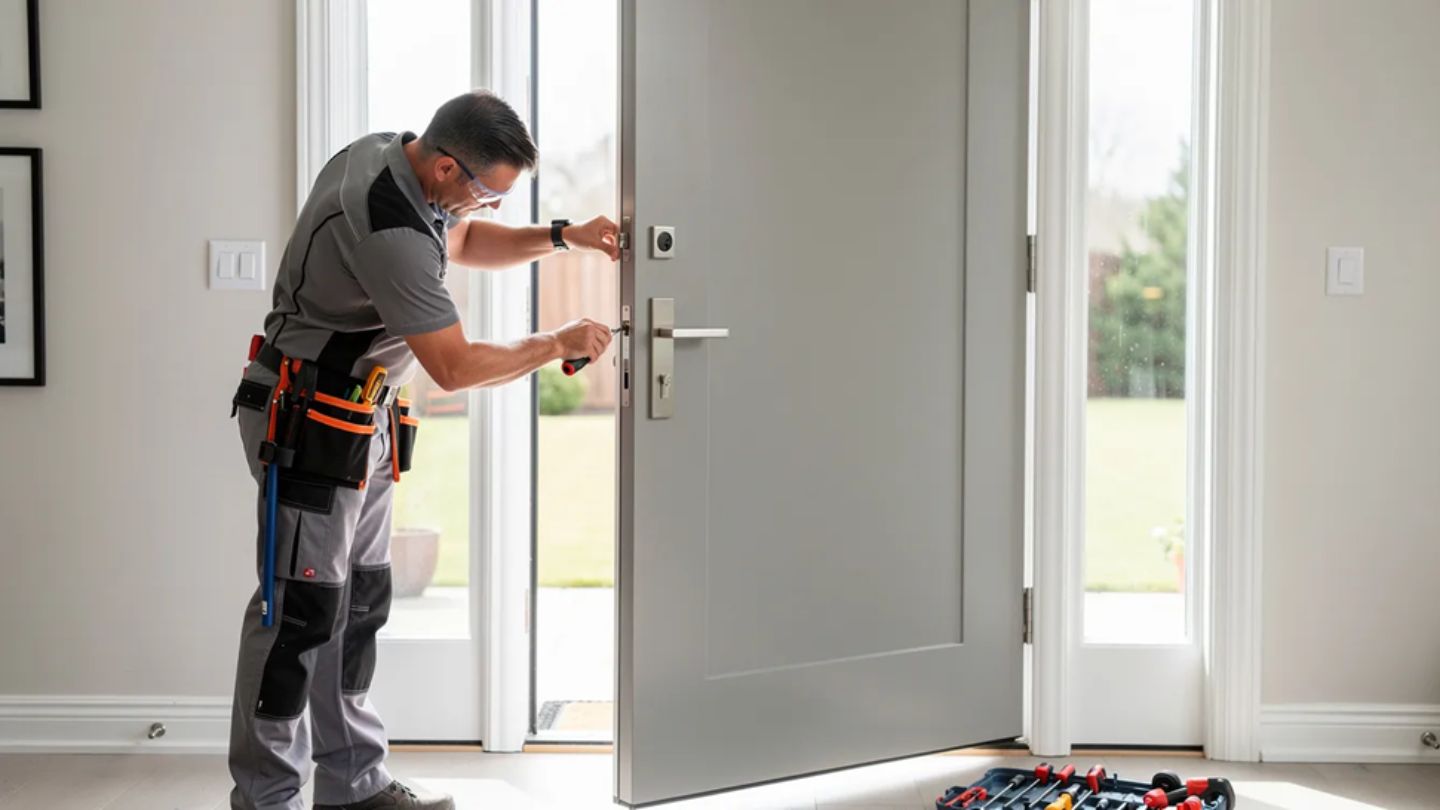
Asking about the project timeline helps set realistic expectations for the door replacement process, including key milestones from contract signing to the final walkthrough.
After accepting a quote, the custom door lead time typically runs 2–4 weeks. Installation itself usually takes 2–4 hours for a standard single door, longer for framework, sidelights, or custom details. Weather considerations matter; spring and fall offer ideal conditions for exterior work, while extreme cold or snow may delay projects.
On install day, expect protection of interior floors and exterior surfaces, removal of your old door, frame, and jamb inspection, shimming and leveling, fitting the slab into the frame, hardware installation, sealing, weatherproofing, and final adjustments.
Post-installation services should include warranty registration, maintenance guidance, storm door reinstallation (if applicable), and a commitment to address any necessary adjustments during the labor warranty period.
A well-planned entry door replacement can improve your home’s security, energy efficiency, durability, and overall curb appeal for years to come. By asking the right questions about materials, installation, warranties, and long-term performance, homeowners can make more confident decisions and avoid costly mistakes while selecting a door that fits both their needs and their home’s style.
At Columbus Door Sales, we help homeowners choose high-quality entry doors in Powell and the surrounding areas that are designed to withstand Central Ohio’s changing climate while enhancing the appearance, comfort, and value of their homes. In addition to expert entry and patio doors services, our team also provides dependable commercial door solutions, complete residential garage door services, and durable garage door openers and accessories tailored to meet the needs of homes and businesses throughout the area. Contact us today to get started with the right door solution for your property.
Fiberglass doors are typically the best all-season option for Central Ohio due to their resistance to warping, moisture, and temperature swings. They require minimal maintenance and maintain their appearance through freeze-thaw cycles. Steel doors offer excellent durability and security at a lower cost, while wood doors provide classic charm but demand more maintenance in humid conditions.
Budget $570 to $3,420 for complete entry door replacement in Columbus, with average costs around $1,368 including materials and labor. Steel entries average approximately $1,368 installed, fiberglass around $1,778 for mid- to high-quality options, and wood doors approximately $2,736 for premium choices. Ensure quotes include framework, permits, removal, and finishing.
Most entry doors fit standard openings, but older homes sometimes feature non-standard dimensions requiring custom doors. A professional assessment determines whether your existing rough opening accommodates standard sizes or needs modification. Custom sizing adds lead time and cost but ensures a perfect fit and proper performance.
.jpg)


